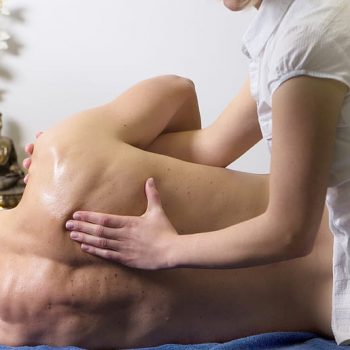

Sports massage is a form of bodywork geared toward participants in athletics. It is used to help prevent injuries, to prepare the body for athletic activity and maintain it in optimal condition, and to help athletes recover from workouts and injuries. Sports massage has three basic forms: pre-event massage, post-event massage, and maintenance massage.
Below are a few techniques used during a Massage for Rehabilitation of a musculoskeletal injury
Soft Tissue Release
STR is a technique whereby the therapist actively stretches muscle fibres, tendons and fascia. It involves repeatedly and quickly stretching small areas of soft tissue by applying precise pressure to the muscle and then moving it to stretch it.
Benefits of soft tissue release can include
o Reduction in discomfort or pain
o Improving joint range of motion
o Improved Muscular Balance
Trigger Point Therapy
A trigger point is a hyperirritable spot within a muscle that often results in a reduced range of motion and muscle weakness otherwise known as knots. When the muscle experiences overuse (repetitive movements or poor posture) or injury tight bands of fibres form within the muscle to create a temporary stabilising effect to protect the area and these are known as trigger points (TP). Although TP’s are a protective response to injury, many outlive their usefulness and remain when not needed causing altered movement patterns of the muscle, that was originally adopted to compensate for the injury to remain. This longterm (dysfunctional) altered movement of the muscle can lead to pain either locally or referred and is usually joint-related.
Benefits of Trigger Point therapy
o Increased flexibility and contractibility of the affected muscle
o Improved range of motion
o Reduced local pain
o Reduced referred pain
o Improved circulation
o Increased local and general relaxation
What discomfort to expect during and post-trigger point treatment?
Initially, when pressure is first applied, the client will feel pain but this should be a ‘nice’ relieving pain, and the therapist will continue the pressure until the pain has more or less gone away. If the pain is persistent or uncomfortable, more than a 7/10 on the pain scale, the therapist will stop the treatment.
Muscle Energy Techniques
Muscle energy techniques (METs) are a type of manipulative diagnostic tool to treat a patients’ muscles actively upon request, from a precisely controlled position, in a specific direction and a distinctively executed counterforce.
The aim of a MET is to normalise joint range of motion
Benefits of METs
Depending on the context the objective of METs can include:
o Restoring normal tone in hypertonic muscles
As Physiotherapists we aim to achieve relaxation in hypertonic shortened muscles, certain types of massage therapy can also achieve this relaxation effect. A MET is likely to be completed in conjunction with massage therapy.
o Encourage strengthening of weak Muscles
METs can be used to activate certain muscle groups by contracting a muscle and resisting the therapist (isometric contraction). For example, a person can resist a movement using 20 30% effort for up to 10 seconds. This process is repeated 5 – 10 times with a 10 – 15-second break in between. Improved performance can be noted over time.
o Prepares Muscles for Subsequent stretching
Everyone can improve their flexibility and METs can be used to help achieve this goal
If you want to improve the patient’s flexibility past the point of normal a more aggressive MET approach might be recommended, this will then have the effect of relaxing more of the muscle allowing it to be lengthened even further, either way, once an MET has been incorporated into the treatment plan, a flexibility program can follow.
o Increasing joint mobility
Using MET is the best way to improve the mobility of the joint. Using nets is the best way to improve the mobility of the joint. The focus of the MET is to get the patient to contract the muscles, this subsequently causes a relaxation period allowing a greater range of motion to be achieved within that specific joint.
o Boosting local circulation
Repeating processes of contraction encourages blood flow into that area.